SFTT's Unique Mission

Support our frontline troops with more than lip service—help them survive the rigors of war and reclaim their lives.

SFTT received the following note from Sue Diaz, journalist, Blue Star mom and a leader of writing workshops for veterans. SFTT is proud to share a Mother’s story which she documents in Minefield’s of the Heart.

“I’d like to share with you a video story of the beginning of my son’s journey home after two long deployments in Iraq’s Triangle of Death.   Here’s the YouTube link:

It’s a true story that also offers hope. And I think it’s one that many military families can relate to. If you think so too, please feel free to post or share it with others in your online community.

Sincerely,
Sue Diaz –  journalist, Blue Star mom, and leader of writing workshops for veterans

On behalf of all American, we would like to thank the men and women in uniform who continue to give so much for our country. We hear you Sue Diaz.

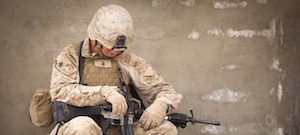
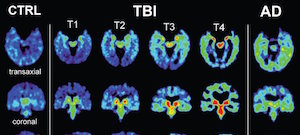
The news media is alive with the idea that a “simple tweak” of padding in military helmets will reduce TBI (“traumatic brain injury”) and, perhaps, PTSD (“post traumatic stress disorder”).   Ms. Claudia Cowan of Fox News, published an article on Aril 22nd which suggests that “a little padding goes a long way . . . to provide better protection from blunt force contact.”

Quoting scientists at Lawrence Livermore National Labs, Ms. Cowan suggests that “ by adding just a quarter-inch, or even an eighth of an inch, of padding, helmets had a 24 percent reduction in force to the skull.”
 
“‘When you look at the accelerations that can cause injury, just a small increase in thickness can knock that acceleration down to a point where it’ll make very severe injuries potentially a little less severe, and very light injuries maybe not happening at all,’ explained Michael King, the study co-author and a Lawrence Livermore mechanical engineer.”
 
The yearlong study, funded by the Pentagon’s Joint IED Defeat Organization,  “concluded that the Army’s helmet padding  worked just as well as the padding in NFL, but that there just needed to be a little more of it.”
 
“Concussions among U.S. troops in Afghanistan increased from 62 diagnosed cases in June to 370 in July when the new rules were imposed, according to the U.S. Central Command, which oversees combat here. From July through September, more than 1,000 soldiers, Marines and other U.S. servicemembers were identified with concussions, more than twice the number diagnosed during the previous four months, Central Command says.”
 
While adding more padding may sound like a simple fix, it would require soldiers to wear a helmet one size bigger, and carry additional weight on their shoulders all day.  Helmets normally weigh about 5 1/2 pounds, and a larger size would add about 4 ounces. 

While this appears to be very good news to curb the dramatic increase in PTSD injuries suffered by our troops serving in Afghanistan and Iraq, one wonders why it has taken so long to come up with this “simple tweak.”  More importantly, how long will it take to provide our troops with the additional padding to protect against head injuries.  In fact, some of the articles suggest that the military leadership is reluctant to increase the weight of equipment worn by servicemembers.  Given the critical need to provide better protection for brain injury, it is hard to justify the delay when the “quick fix” adds only 4 oz to the 130 pounds of gear currently worn by servicemembers.

As SFTT has reported on several occasions, the US Army has had sensors embedded in helmets  for well over three years to evaluate brain-related injuries.    What took the US Army so long to come up with the “simple tweak”?  Will it take as long to have the additional padding deployed to our brave heroes?

Comprehensive_Soldier_Fitness_LogoIf you had a Kurt Vonnegut sense of humor, you would be amused at the inventive ways lobbyists and institutions of higher learning part taxpayers from their hard-earned dollars to fund military programs of questionable value.  The latest program from Dr. Strangelove’s treasure trove is the US Army’s Comprehensive Soldier Fitness Program.  The price tag is only $125 million and, according to the Army is designed to improve “Soldier performance and readiness. Build confidence to lead, courage to stand up for one’s beliefs and compassion to help others. Comprehensive Soldier Fitness is about maximizing one’s potential.”   This program is deemed so important to forming core values of our men and women in uniform and their families, that they have even developed a camouflaged logo to promote the program.  I suspect that by the time the lobbyists and universities have milked this program dry it will cost well over $125 million, but who is counting with a Federal budget spiralling out of control.

John Hogan, writing for Scientic American in an April 18th article entitled, Beware the military-psychological complex: A $125-million program to boost soldiers’ “fitness” raises ethical questions, addresses the “big picture” issues that surround this program.  Mr. Hogan begins with a reminder from President Eisenhower some 50 years ago of the every present dangers of the ”unwarranted influence” on the “military-industrial complex” on American politics.  Mr. Hogan goes on to say that ”President Dwight Eisenhower also deplored the growing dependence of scientists on federal funding. ‘The prospect of domination of the nation’s scholars by federal employment, project allocations and the power of money is ever present—and is gravely to be regarded.’”

According to Mr. Hogan, the Comprehensive Soldier Fitness Program is “the brainchild of one of the most powerful figures in American psychology, Martin Seligman of the University of Pennsylvania. A former president of the American Psychological Association (APA), Seligman is best-known for founding the enormously popular positive psychology, or ‘happiness,’ movement, which emphasizes positive rather than negative personality traits and emotions.”

Raising doubts on the efficacy of such psychological programs, Mr. Hogan draws attention to  psychologists Roy Eidelson, Marc Pilisuk and Stephen Soldz who published a fascinating article for Counterpunch entitled The Dark Side of  ”Comprehensive Soldier Fitness.”  In it, these distinguished psychologists ask ”Why is the world’s largest organization of psychologists so aggressively promoting a new, massive and untested military program?”  Their “answers” or lingering “questions” certainly disturbed me and I believe that others will also be alarmed.

Found below are just a few of their observations and, I would certainly encourage SFTT members to read the entire CounterPunch article:

  • “It is highly unusual for the effectiveness of such a huge (1.1 million service members) and consequential intervention program not to be convincingly demonstrated first in carefully conducted randomized controlled trials – before being rolled out under less controlled conditions. Such preliminary studies are far from a mere formality. The literature on prevention interventions is full of well-intentioned efforts that either failed to have positive effects or, even worse, had harmful consequences for those receiving them.”
  • “We also believe that other key aspects of Comprehensive Soldier Fitness should have received explicit discussion in this special issue. It is standard practice for an independent and unbiased ethics review committee (an “institutional review board” or “IRB”) to evaluate the ethical issues arising from a research project prior to its implementation . . . This process is even more critical given that the soldiers apparently have no informed consent protections – they are all required to participate in the CSF program. Such research violates the Nuremberg Code developed during the post-World War II trials of Nazi doctors.”
  • “Comprehensive Soldier Fitness draws heavily on ‘positive psychology’ in aiming to reduce the incidence of psychological harm resulting from combat and post-combat stress . . . But writers such as Barbara Held, Barbara Ehrenreich, Eugene Taylor and James Coyne have offered compelling critiques of positive psychology, including its failure to sufficiently recognize the valuable functions played by “negative” emotions like anger, sorrow, and fear; its slick marketing and disregard for harsh and unforgiving societal realities like poverty; its failure to examine the depth and richness of human experience; and its growing tendency to promote claims without sufficient scientific support (e.g., the relationship between positive psychological states and health outcomes, or the mechanisms underlying ‘posttraumatic growth’).”
  • “Ultimately, there is a paradox that should be foremost in the minds of professional psychologists. Helping people who have already been harmed by trauma is essential. But should we be involved in helping an institution prepare to place more people in harm’s way without careful and ongoing questioning and review of the rationale for doing so? Whatever the needs for a military for national defense, or the benefits of team building, loyalty, camaraderie, and a positive outlook, militaries are, among other things, authoritarian institutions that kill, maim, deceive, and actively reduce an individual’s sense of independent agency.”

This is a pretty strong rebuttal of the “happy soldier” program now being engineered by university psychologists with little empirical evidence to justify such “training.”  The fact that it has been so widely endorsed by our military leadership is quite frightening and I suspect that the debate will intensify as public awareness of this psychological programming receives more attention.

Page 30 of 97« First...1020...2829303132...405060...Last »

Share a story

Whether you are on active duty or retired, a friend or family member we encourage you to share your story. As proud Americans we salute our heroes and thank you for your courage and sacrifice. We want to hear from you and so do our readers.

Stay informed: latest news and stories

We respect your email privacy

Thank you for signing up! An email will be sent to the address you provided, asking you to confirm your sign up.

News & Announcements

Our Story

photo of a soldierStand For The Troops (“SFTT”) is a 501(c)(3) non-profit Educational Foundation established by the late Col. David H. Hackworth and his wife Eilhys England to insure that our frontline troops have the best available leadership, equipment and training.

In the past four-plus years SFTT'S active campaign has focused on ensuring America's frontline troops get the best available individual protective equipment and combat gear.

Donations and contributions from concerned Americans help fund the SFTT website.

Hackworth Memorial DVD

photo of HackworthIncludes rare footage from Hack's memorial service at Fort Myers Chapel and burial in Arlington National Cemetery.
All donations received from purchasing of The Hackworth Memorial DVD go to Stand For The Troops a 501 (c) 3 non-profit, non-partisan apolitical foundation established by Hack and his wife Eilhys to make sure that America's front-line forces—the kids Hack loved out at the tip of the spear—always have the right training, leadership and equipment to meet their assigned missions and make it home alive and in one piece.

Our Campaigns

  • December 23, 2009: The law firm of Kirkland & Ellis LLP filed the final motion with the Federal Court in Washington, DC in the Freedom of Information Act (“FOIA”) on behalf of the SFTT’s editor for forensic records held by the Department of Defense (“DOD”).
  • October 16, 2009: The Government Accountability Office (“GAO”) issues report to Congress calling for “independent expert assessment of Army body armor test results.” This damning report of US Army body armor test procedures is the outgrowth of a two-year investigative and educational campaign by SFTT to seek fair and impartial test procedures.

Get Involved

  • RSS feed
    Subscribe to our RSS feed
  • YouTube
    Watch our videos
  • Flickr
    See our photos